Our Science
Mission
"Under this concept, we use marine mammals, seabirds, and fish as windows into the ecosystem they inhabit."
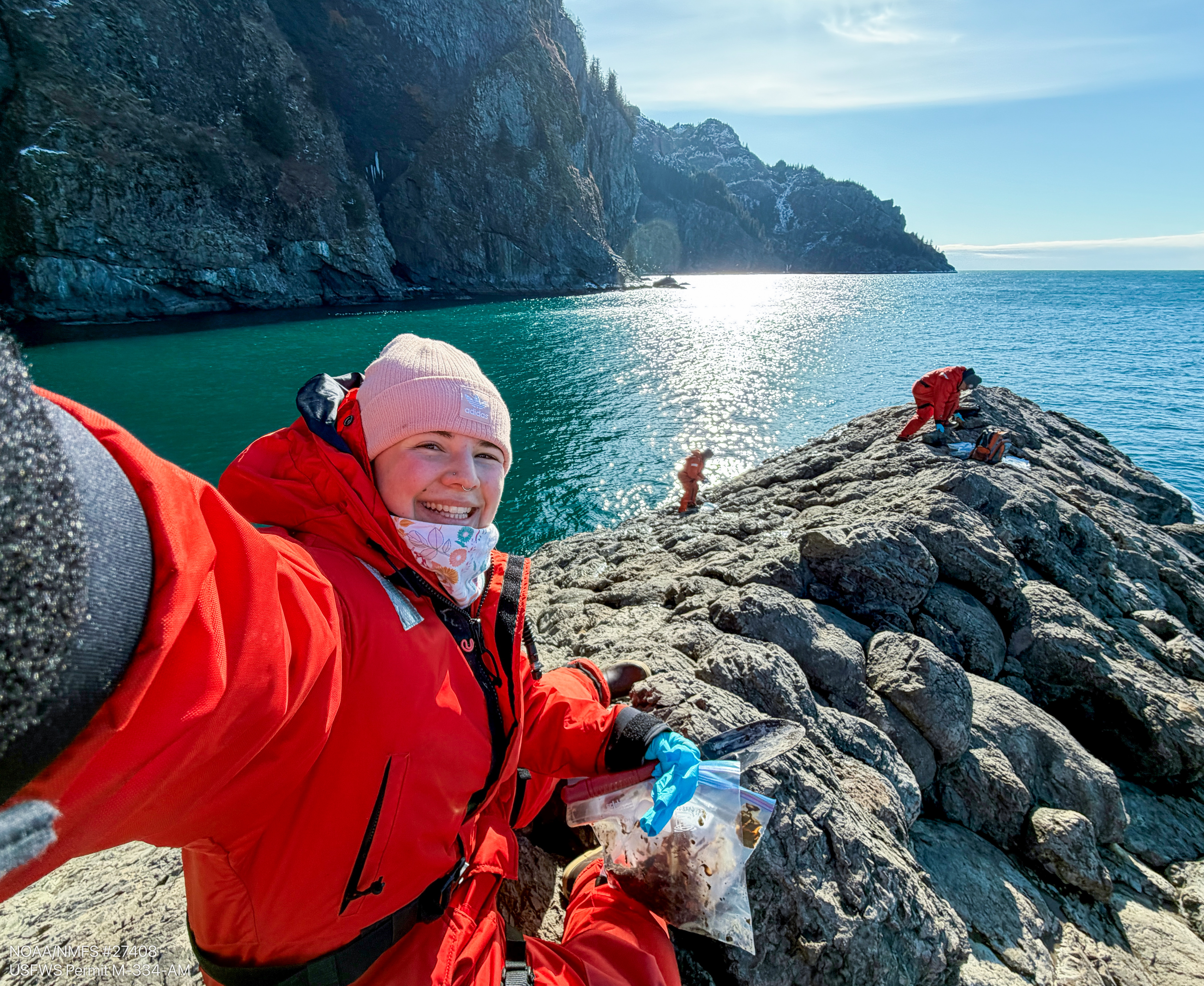
The overall goal of our Science Program is to develop an understanding of the role of marine mammals, birds and fish in the arctic and subarctic marine ecosystems, and to generate scientific knowledge relevant to resource management and policy. Our projects focus on Alaska marine life and environments, but reach globally with international collaborations.
The Center's unique geographic location, marine cold water research facilities, live animal collections, and specialized staff allows us to use a combination of experimental and field research to address emerging subarctic broad scale topics.
Core Research Objectives
We coordinate experimental and field research to meet five critical pillars of marine scientific discovery.
Investigate
Investigate physiological and ecological processes affecting marine animal population dynamics.
Conduct
Conduct controlled experiments to understand factors affecting reproductive success and fitness in marine species.
Monitor
Monitor marine animal responses to environmental variability and stressors.
Evaluate
Evaluate human impacts on our marine environments and animal populations.
Develop
Develop tools to support recovery and restoration of subarctic marine resources.
Resident Animal
Collection Research
Our resident animal collection involves a diverse variety of marine organisms from tiny invertebrates to large Steller sea lions. Our largest resident, male Steller sea lion Pilot, peaks at well over 1,700 lbs during the breeding season.
The resident fauna offers scientists opportunities to study animals year-round in their natural salt water habitats and at ambient northern latitude temperatures.
Explore Resident Species
Historical Research Milestones
Our 25+ year research footprint is dotted with surprising stories and foundational milestones in marine mammal science.
The Pre-Opening "Squatters"
Woody, Sugar, and KiskaThese three original Steller sea lions arrived from the Vancouver Aquarium in 1993—five years before the center opened. They spent five years on the active construction site waiting on the building to rise.
Decades-Long Breeding Gap Broken
Calves Ellie & ForrestEllie and Forrest are the first Steller sea lions successfully born in a North American facility since the 1980s. A monumental conservation milestone that unlocked neonatal developmental science.
The PHOCAS Seal Science Squad
Tunu & Kunik (18+ Studies)Our spotted seal Tunu and ringed seal Kunik contributed to 18+ major peer-reviewed papers. They have likely generated more baseline ice-seal acoustic and rest metabolic data than any other specimens on Earth.
Our Scientific Team
Meet the curators, principal investigators, and affiliate research associates coordinating our subarctic marine programs.
Dr. John Maniscalco
Principal InvestigatorMarine Mammal Research
Studies: Steller Sea Lion demography
Dr. Tuula Hollmen
Affiliate ScientistSeabird Ecology / UAF
Studies: Eider diving bioenergetics
Dr. Carrie Goertz
Director of Animal HealthVeterinary Medicine
Studies: Wildlife epidemiology
Dr. Amy Bishop
Research AssociateSpatial & Telemetry Ecology
Studies: Seal path tracking algorithms
Active Field Research Projects
We run extensive field telemetry and observation networks across Alaska to collect vital ecosystem health metrics.
Chiswell Steller Census
Seward's longest ongoing remote video monitoring project, capturing 27 years of Steller sea lion demographics and pup births on Chiswell Island.
Gulf Seabird Demography
15+ years of tracking black-legged kittiwake, common murre, and eider productivity across remote Kenai tidewater glacier fjords.
Resurrection Bay Surveys
Alaska's only year-round marine bird survey, monitoring a 44-kilometer nearshore habitat monthly to detect ecological shifts.
Chiswell Island Rookery Stream
Using high-definition remote video monitoring systems on the Chiswell Islands rookeries, our scientists study wild Steller sea lions without human ecosystem intrusion.
These real-time streams run continuously during the summer pupping season, feeding data directly to our researchers and public exhibits.
Launch Live Ocean CamsResearch Facilities & Wet Labs
Our facility offers world-class laboratory systems designed for subarctic biochemistry, veterinary diagnostics, and cold water experiments.
Indoor Wet Laboratories
Continuous access to ambient or temperature-controlled subarctic seawater loops directly from bay depths.
Husbandry Research Deck
Over 10,000 sq ft outdoor deck supporting large pinniped pools for maternal care and bioenergetics studies.
Analytical Diagnostics
Outfitted specifically for marine lipid analysis, stable isotope prep, and diagnostic PCR.
Peer-Reviewed Publications
Our scientific curators have authored close to 400 academic journal papers since 1998.
Open Science
Seminar Series
We coordinate closely with our educational department to translate marine studies into public literacy. Our curators deliver over 60 public presentations annually.
Join our monthly seminar series hosted live in our Seward theater auditorium, or streams live globally to public schools.
Plan Center Visit