
Beluga Whale
Delphinapterus leucas
Marine Mammals
Alaska's cold, nutrient-rich subarctic oceans support some of the most productive marine ecosystems on Earth. Explore our scientific catalog of resident wildlife.
The Steller Sea Lion (Sugt'stun name: Wiinaq) is the largest of the eared seals. Our resident collection allows scientists to study sea lion energetics, diving physiology, and maternal diets year-round in Seward.
Wiinaq represents an icon of the Gulf of Alaska shores. Watch them dive gracefully from our under-water viewing panels or train on the research deck.
Read Species Profile →Filter by habitat class or search specifically by species name. Get detailed scientific classifications for all residents.
Dive into our interactive Master Animal Database with full active counts of all 2,801 residents, 153 species, touch-tank guidelines, scientific publications list, and official SAAMS 501(c)(3) financials.
From the turbulent shorelines to the silent abysses, Alaska's seas support highly distinct habitat zones. Learn about the ecosystems we study.
Dense canopies of bull kelp harbor sea otters, rockfish, and invertebrates. High-productivity zones critical for coastal bio-shielding.
Turbulent tidal zones home to sea stars, barnacles, anemones, and crabs. Adaptable organisms designed to survive severe air & water cycles.
Deep offshore waters navigated by salmon, orcas, belugas, and migrating seabirds. High-nutrient upwellings support immense food webs.
Listen to the calls of Alaska's iconic marine mammals, captured by underwater hydrophones.
The International Union for Conservation of Nature (IUCN) Red List provides the global standard for assessing species extinction risk. We use these ratings to guide our wildlife care and research investments.
Many subarctic species face accelerating climate stressors, sea ice loss, and marine debris risks, making these rankings highly dynamic.
Support Species RecoveriesSpecies are abundant with no immediate extinction risks.
Close to qualifying for or likely to qualify for a threatened category soon.
High risk of endangerment in the wild in the medium-term.
Extremely high risk of extinction in the wild in the immediate future.
Providing world-class welfare to our resident collection requires deep logistics. Peek into the statistics that keep our pools running and animals thriving.
Directly filtered from Resurrection Bay depths, keeping pools at natural subarctic temperatures.
Capelin, herring, squid, and krill supplied to puffins, otters, seals, and octopus.
Veterinary and husbandry experts conducting continuous physical checkups and telemetry logging.
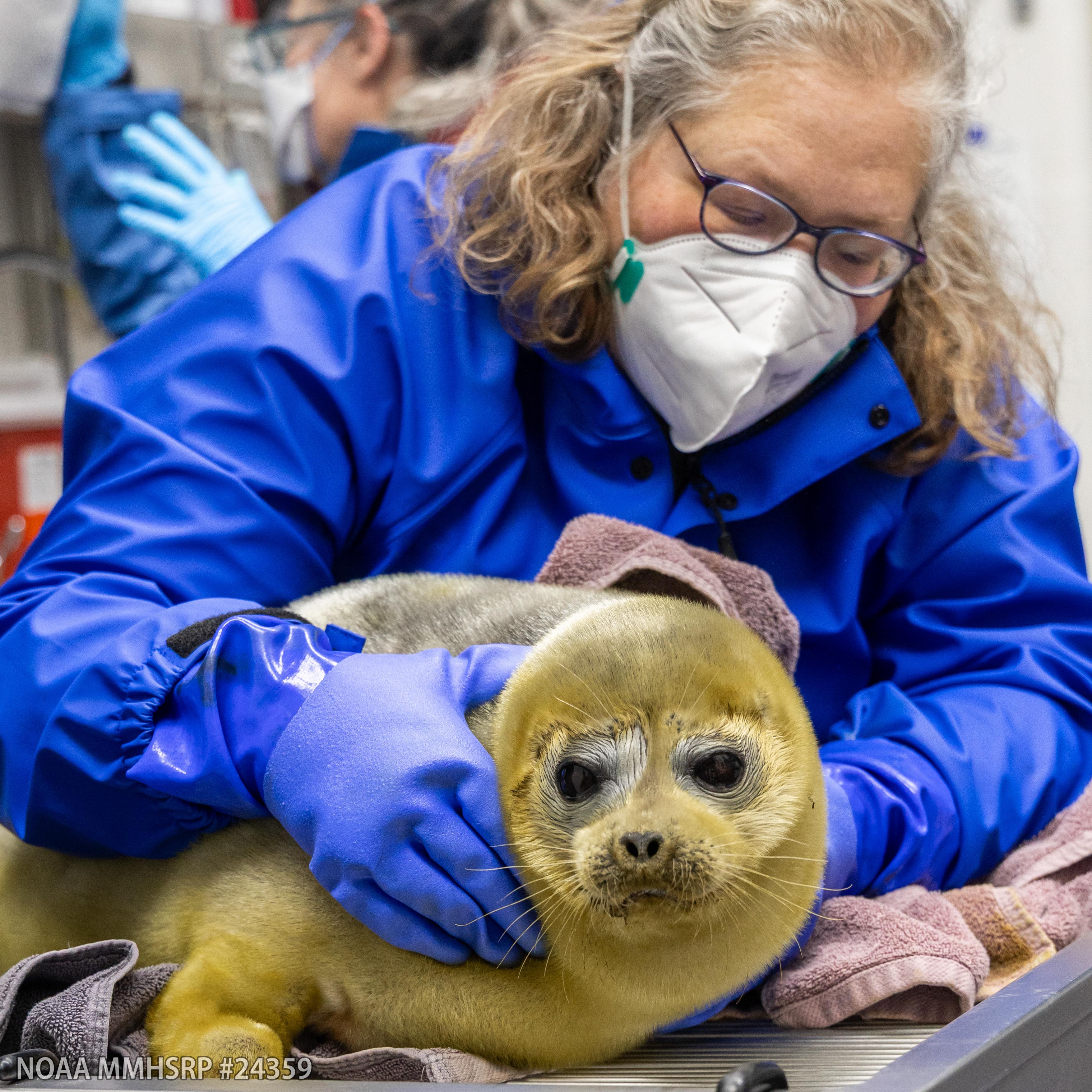
Husbandry studies on resident seals and Steller sea lions are vital. They allow researchers to calibrate physiological satellite telemetry tags, assess hearing frequencies, and establish baselines before deploying sensors on wild populations.
By understanding the resting metabolic needs of seals in Seward, we can accurately interpret diving logs recorded by wild seals in the Bering Sea.
Explore Active Science ProjectsIf you spot an injured, separated, or distressed seal, sea otter, or seabird anywhere in Alaska, do not touch or approach. Contact our responders immediately.